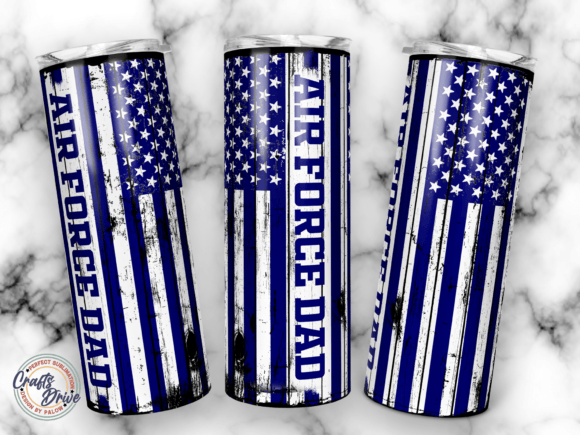
A Straightforward Review of the Air Force Dad Tumbler PNG Design
Let’s talk about this ‘Air Force Dad Tumbler’ design as if we’re about to load it into our machine and stitch it out for a real client. The product description tells us it’s a digital graphic meant for a 20oz skinny tumbler, but as an embroidery designer, I’m immediately looking past that intended use. My job is to judge whether this design has the bones to become a great embroidered project—on a sweatshirt, a tote bag, or a custom patch. Here’s my practical take.
The Immediate Visual Personality
First impressions matter, especially when a customer is choosing a personalized gift. This design, with its clear ‘Air Force Dad’ lettering and supporting graphics, creates a mood of proud, straightforward recognition. It’s not overly sentimental or cluttered; it feels respectful and clean. That visual personality is a big plus. It tells me this embroidery design would translate well into stitches because it’s built on clear shapes and text. The layout isn’t fighting with itself, which means when converted to stitches, the stitch density can be managed properly, avoiding those overly dense, stiff areas that can ruin a soft tote bag or baby clothes.
Where This Design Thrives in Real Projects
Picture this scenario: a client requests a gift for an Air Force father—maybe a custom apparel item like a high-quality polo shirt or a cozy throw blanket. They want it to feel special but not flashy. This is where I’d consider using this PNG as the foundation for an embroidered patch or direct garment embroidery. The clean lines suggest it would perform well on stable fabrics like mid-weight cotton for aprons, canvas for tote bags, or felt for creating a standalone patch. For small business merchandise or Etsy listings focused on military families, this design adds a product that’s easy to understand and emotionally resonant. It’s also a strong candidate for holiday embroidery projects, like a Christmas stocking or a decorative pillow cover, where the theme is about family and service.
Considering the Stitching Clarity and Scale
The product notes specify resizing to a particular dimension, which is a crucial clue. In machine embroidery design, size directly impacts clarity. At a larger scale, like on a sweatshirt embroidery, the details and text will remain crisp. But we must be careful. If you scale it down significantly for a cap or a baby bib, those smaller lettering elements could become a challenge. They might require very precise stitching and a lighter stitch density to prevent puckering. This isn’t a flaw of the design, but a practical note: test it on scrap fabric at your intended final size first. Always check the thread color contrast against your fabric—this design likely relies on clean contrasts (dark blue on light fabric, for instance) to maintain its proud, clear mood.
Where to Exercise Caution
Every design has its ideal applications and its less-suited ones. For this ‘Air Force Dad Tumbler’ graphic, I’d be cautious on highly textured fabrics, like some sweater knits, where fine details could get lost. Similarly, on very thin or stretchy fabric, the stability needed for clean text might demand a heavyweight stabilizer and careful hoop technique. The design’s potential strength—its clean, filled shapes—could become a liability on a curved surface like a cap if the hoop size and placement aren’t perfect. And for products destined for frequent washing, like kitchen towels or active wear, you’d want to ensure the stitch structure is secure and the thread choices are durable to maintain that professionalism and customer trust.
The Impact on Your Product’s Value
Using a design like this effectively boosts your product’s visual appeal and giftability. It’s instantly recognizable, which aids in buyer engagement—people know what it represents. For a craft business, that means quicker sales and happy customers. When stitched well on a quality item, it elevates the entire handmade presentation. It feels intentional, not generic. This helps with brand consistency if your shop focuses on military-themed or family-oriented goods. However, the value hinges on execution. A poorly stitched version, with puckered text or unclear details, would undermine all that potential. That’s why the designer’s skill in translating this digital graphic into a physical stitch-out is paramount.
Practical Notes Before You Hit ‘Start’
Before committing this to a client’s project or your next craft fair product, run through this checklist. It’s born from years of both triumphs and lessons.
- Test on Scrap: Always stitch a sample on the exact fabric type you plan to use. This reveals how the fabric texture interacts with the design.
- Check Scale & Hoop: Confirm your desired final size works with your machine’s hoop size. The provided dimensions are a guide, but your project may need adjustments.
- Inspect the Details: Look closely at the small elements in the PNG. Are there tiny corners or fine lines that might need stitch type adjustment (like a running stitch instead of a satin stitch) to remain clean?
- Mockup in Black & White: View the design on both light and dark backgrounds in your software. This helps plan thread colors for maximum clarity.
- Stabilizer Strategy: Choose your stabilizer based on the fabric’s weight and stretch. A design with text often needs good support.
- License Confirmation: Crucially, since this is a digital embroidery file from the Crafts and Graphics category, verify the licensing terms before using it for commercial embroidery projects or selling finished items. This step protects your small shop product business.
The Final Stitch: A Design Ready for Meaningful Work
The ‘Air Force Dad Tumbler 20oz PNG’ design, when viewed through the lens of an embroidery professional, is a solid, purposeful design asset. Its strength is its clear thematic focus and uncluttered layout, which are excellent foundations for a successful embroidery project. It naturally fits into a range of meaningful products—from personalized gifts for a proud family to boutique branding for a niche shop. Your job as the maker is to bring it to life with careful technique, appropriate materials, and a clear understanding of its limits on certain fabrics and surfaces. Done right, it stitches out into a product that feels valuable, recognizable, and deeply appreciated. That’s the real goal of any embroidery file we choose: to end up as a finished product that truly connects.